
Out of Stock of Products
To you, there was no need to explain why buy a robotic lawnmower, maybe we need to help you understand its use. Go for it!
In our technological age, robotic lawnmowers have become a popular option for maintaining our gardens without the need for manual labor. However, many owners do not know how these devices work in detail. In this article, we will explore how a robotic lawnmower works and how it can simplify our garden maintenance tasks.
First, we will address the pre-installation steps, including planning and mapping the area. Next, we will analyze the navigation sensors and the robot's cutting system, as well as the programming of its functions and control. Finally, we will discuss the maintenance and safety necessary to keep the robot in optimal condition. With this information, you can decide whether to invest in a robotic lawnmower and enjoy the comfort and advantages that this garden robotics technology offers, such as Bosch robotic lawnmower Indego or the Husqvarna.
Operating the robotic lawnmower: Getting started
One of the advantages of robotic lawnmowers (or at least, of most robotic lawnmowers) is its easy installation and start-up. Next, we are going to explain to you what are the first steps to take when installing and configuring a robotic lawnmower.
Installation of the robotic lawnmower
To install the robotic lawnmower for the first time, it is necessary to follow a series of previous steps. Here we detail how to do it:
- Place the perimeter wire around the cutting area. Delimiting the area in which the robotic lawnmower must act.
- Install the guide cable to guide the robot to the charging station so that when its battery runs out, charge it again or so that it returns to its base once the job is finished.
- Set cutting limits.
- Carry out the installation of the robotic lawnmower following the instructions in the manual. Each robotic lawnmower is unique and as such its instruction manual will specify the steps to follow for its installation and initial configuration.
By following these steps, you can install your robotic lawnmower and enjoy a well-kept lawn effortlessly.
Work area planning and mapping
For the correct functioning of a robotic lawnmower, it is essential to carry out a work area planning and mapping. Some models use sensors and cameras to scan the garden and create a digital map with the dimensions and characteristics of the defined area. This information is stored in the lawnmower's system, allowing it to operate autonomously and avoid obstacles as it moves through the yard.
There are other models that do not know the garden map nor can they memorize it, but they are capable of detecting obstacles and avoiding them. In any case, it is important to consider the boundaries of the garden and the location of flowers, shrubs and other landscaping elements to avoid damage.
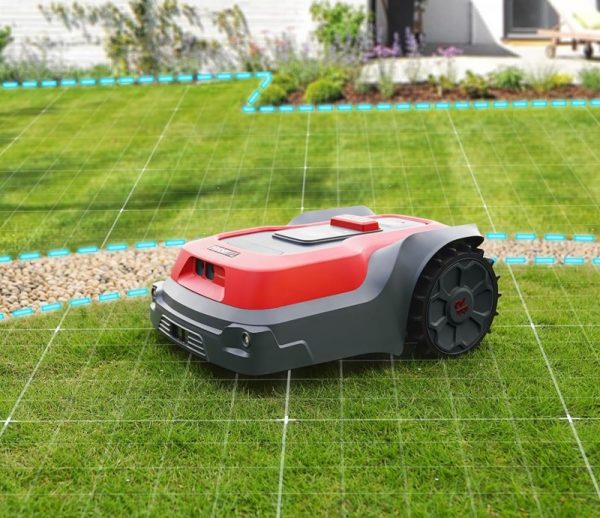
In our article on How the navigation system of lawnmower robots works, we delve into the different methods of mapping and planning the work area, and how these influence the performance and effectiveness of the robotic lawnmower.
Navigation sensors
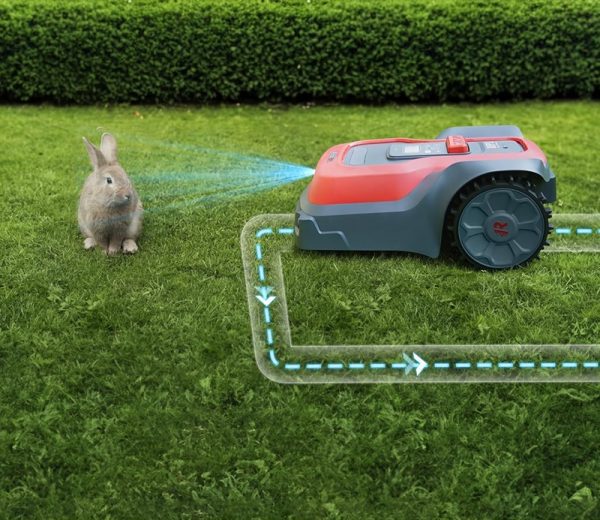
The simple fact that the robotic lawnmower has sensors is essential for efficient and safe navigation. These navigation sensors They can vary depending on the robot model, but commonly include technologies such as infrared, ultrasound, and GPS navigation systems.
Thanks to these sensors, the robot can detect obstacles, changes in terrain and garden boundaries, allowing it to avoid collisions and perform precise maneuvers. Additionally, some models have integrated GPS for even more precise navigation.
Cutting system
In a robotic lawnmower, the cutting system It works similarly to a traditional lawnmower. Uses sharp, rotating blades to cut grass to the desired height. Additionally, some models feature height adjustment options to accommodate different grass types and cutting preferences.
The blades are driven by an electric motor that provides the power needed to cut grass quickly and efficiently. Mulching is also an option available on some models, allowing grass clippings to be composted and returned to the lawn.
In short, the cutting system of a robotic lawnmower offers an efficient and customizable solution for keeping your lawn well-manicured. But to do this, it is essential to keep the blades in perfect condition.
Out of Stock of Products
Programming of functions and control
La programming and control These are two key features of robotic lawnmowers. With our wide range of options, we can customize the lawn mowing experience to each individual's needs.
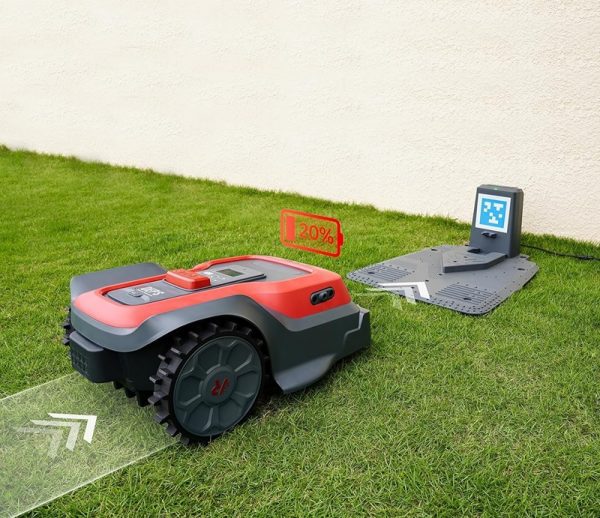
Additionally, most models include auto-charging features, meaning the robot will automatically return to its charging station when it needs to recharge. This ensures that the battery is always ready for the next cut, without you having to worry about autonomy.
Most of the robotic lawnmowers you will find for sale are programmable and automated, meaning you can set mowing schedules and adjust the cutting height to your preferences. In addition, you can control the device through a mobile application or a control panel, giving you great flexibility and convenience.
With our advanced technology, we can guarantee that you will get a uniform and precise grass cut, without having to worry about manual control.
Out of Stock of ProductsMaintenance and Security
One of the most frequently asked questions among users who want to buy a robotic lawnmower refers to their safety and maintenance. Many models have tilt sensors that stop the blades if the robot falls or rises from the ground.
These robotic lawnmowers usually have self-diagnostic functions that alert us to problems or basic maintenance needs, such as cleaning or changing blades. To ensure safe and efficient operation, we recommend following the manufacturer's maintenance instructions and keeping the robot clean and dry after each use.
Frequently asked questions about the operation of a robotic lawnmower
Previously, we have tried to explain how a robotic lawnmower works, but in addition to the previous information, there are a series of frequently asked questions related to the operation of robotic lawnmowers that we are going to answer so that you can clear up any doubts:
What technologies does a robotic lawnmower use to avoid obstacles and changes in terrain?
Robot lawn mowers use various technologies to avoid obstacles and changes in terrain, including:
- ultrasonic sensors: These sensors emit ultrasonic waves that detect objects close to the robotic lawnmower, allowing it to avoid collisions.
- Contact sensors: Some models incorporate contact sensors that stop or change the direction of the robot when it comes into contact with an object.
- Tilt and slope sensors: These sensors allow the robotic lawnmower to detect changes in terrain and adjust its path to maintain a uniform cut.
- Rain sensors: Some robotic lawnmowers are equipped with rain sensors that allow them to return to their charging station when they detect rainy conditions.
These technologies work together to ensure that the robotic lawnmower operates safely and efficiently, avoiding obstacles and adapting to different terrain conditions.
How do you recharge a robotic lawnmower automatically?
Robotic lawnmowers recharge automatically through a process that generally involves the following steps:
- charging station: The robotic lawnmower returns autonomously to its charging station, which is connected to a power source.
- Coupling: Once at the charging station, the robotic lawnmower automatically docks to the charging contacts located on the station.
- Automatic recharge: The robotic lawnmower remains in the charging station while its battery automatically recharges, allowing you to be ready for your next mowing session.
This automatic recharging process allows the robotic lawnmower to maintain its autonomy and ability to operate without human intervention, ensuring that it is ready to perform its mowing tasks efficiently.
What safety measures do robotic lawnmowers incorporate to protect pets and people during operation?
Robot lawnmowers incorporate several safety measures to protect pets and people during operation, including:
- Elevation sensors: These sensors immediately stop the robotic lawnmower's blades if it is raised or tilted, helping to prevent injuries in the event of unauthorized tampering.
- Contact sensors: Contact sensors stop or change the direction of the robotic lawnmower upon detecting contact with an object, pet or person, reducing the risk of collisions and injuries.
- Security code: Some models incorporate a security code that must be entered to activate the robotic lawnmower, preventing its operation by unauthorized persons.
- proximity sensors: These sensors detect the presence of objects, pets or people in the vicinity of the robotic lawnmower, allowing it to stop or modify its trajectory to avoid possible accidents.
These safety measures are designed to minimize the risks of injury or accidents during the operation of the robotic lawnmower, providing an additional layer of protection for both pets and people.
What is the average battery life of a robotic lawnmower before needing to recharge?
The average battery life of a robotic lawnmower before needing to be recharged varies depending on the model and usage conditions. In general, the battery life can range from 1 to 4 hours of continuous work, depending on factors such as the size of the area to be mowed, the type of terrain, the height and density of the grass, and the battery capacity of the robot. mower.
It is important to note that battery life can vary significantly between different models and brands of robotic lawn mowers, and can also be affected by the aging of the battery over time. It is advisable to consult the manufacturer's specifications for accurate information on the battery life of a particular robotic lawnmower.
Out of Stock of Products
If the time has come to replace the battery in your robotic lawnmower, don't miss our section of the best batteries for robotic lawnmowers where you will find spare parts for the most popular models and recommended brands.
Summary: How a robotic lawnmower works step by step
For a robotic lawnmower to work autonomously and efficiently, it is necessary to follow some specific steps. First of all, before using it for the first time, some pre-installation actions must be carried out.
Once installed, the robot uses sensors and a mapping system to determine the boundaries of the cutting area and the location of obstacles. In some cases, the user must manually install a perimeter cable that helps the robot delimit the cutting area.
The robot uses rotating blades to cut grass evenly and efficiently. Additionally, it can be programmed to work at specific times and controlled via a mobile app or remote control.
Some models include auto-charging features, meaning the robot will automatically return to its charging station when it needs to recharge.
Overall, these steps allow the robotic lawnmower to operate autonomously and efficiently to keep your lawn short and well-groomed. It should be noted that there are improvements and details that can further refine the experience, depending on the budget you want to spend on the robot.
So that you can get a much clearer idea of how a robotic lawnmower works, we leave you an explanatory video in which the Husqvarna Automower robotic lawnmower is taken as an example:
In conclusion, by following these steps and paying attention to the specifications of the model in question, you can enjoy a perfect lawn without having to worry about cutting it manually.
Don't you have your own robotic lawnmower yet? Take a look at the following models recommended lawnmower robots:
Out of Stock of Products
Some content on this page comes from Amazon. The prices and availability of their products are constantly changing and are updated every 24 hours. The price and availability that appears on Amazon at the time of purchase will apply to the purchase of the product.




These robots had been recommended to me to mow the grass in my garden, but I had no idea what it was like or how they worked, they seem like a good invention. Can anyone who has it tell me if it is suitable for 250 m² gardens or is it very large?
Hello Sonia, I have a 100 square meter garden and I bought a Greenworks Optimow S robotic lawnmower and I am delighted with it. The truth is that a friend recommended it to me and so far I haven't had any problems. I recommend it to you!
The house I live in has a 300 m² garden and I have recently bought a robotic lawnmower. So far, I haven't had a single problem. Although you should take into account the size of your garden to decide which model to buy.
My lawn mower is a Landroid m500, in case that helps.
Hello everyone. As Nuria says, when buying a robotic lawnmower it is essential to keep in mind the size of the garden.
In our types section you will find purchasing guides for robotic lawnmowers for large, medium or small gardens so you can see which are the most recommended models for each garden.
I hope it helps you.